For specialist doctors planning an overseas medical career, understanding International Medical Registration Pathways is one of the most important steps before applying for jobs abroad. Every country has its own licensing authority, registration process and eligibility requirements, making careful planning essential for a successful transition.
If you’re exploring global career opportunities, you should also learn about Medical Job Opportunities Without Residency, as several countries now offer alternative pathways for experienced International Medical Graduates (IMGs). These options may allow eligible specialists to work without repeating a full residency program, depending on local regulations.
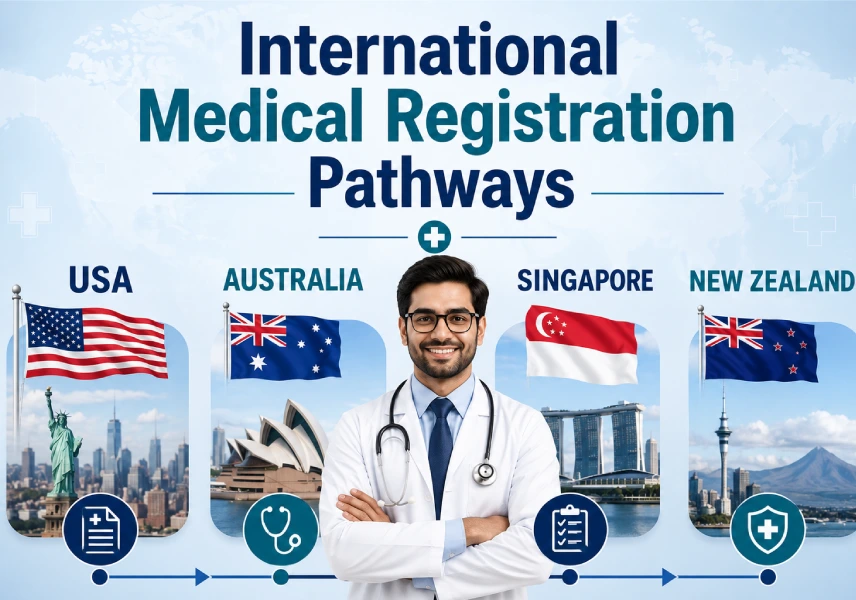
This guide compares the registration pathways in the USA, Australia, Singapore and New Zealand, helping Indian specialist doctors understand qualifications, application processes and career opportunities.
Why International Medical Registration Matters
Medical registration is a legal requirement before practicing medicine in another country. Registration authorities evaluate whether an overseas-trained doctor’s education, specialist qualifications, clinical experience and professional standards meet national requirements.
The registration process helps ensure:
- Patient safety
- Professional competency
- Ethical medical practice
- Consistent healthcare standards
- Quality clinical care
Because every country has different regulations, understanding the process early can save considerable time and effort.
USA Medical Registration Pathway
The United States offers several routes for international medical graduates depending on their qualifications and intended career path.
Typical Requirements
- Recognized medical degree
- ECFMG Certification
- USMLE examinations
- State Medical Board requirements
- Employer sponsorship (for certain pathways)
- Clinical experience
Several U.S. states are introducing alternative licensure pathways for experienced international specialists, particularly in underserved healthcare areas.
Career Opportunities
Eligible physicians may work as:
- Attending Physician
- Staff Physician
- Primary Care Physician
- Hospital-Based Specialist
- Rural Healthcare Physician
Australia Specialist Registration Pathway
Australia assesses overseas specialist doctors through specialty-specific assessment pathways.
The relevant Australian specialist college evaluates whether an applicant’s qualifications and experience are comparable to Australian-trained specialists.
Common Requirements
- Recognized medical degree
- Specialist qualification
- Clinical experience
- English language proficiency
- Medical Board registration
- Professional references
Possible assessment outcomes include:
- Substantially Comparable
- Partially Comparable
- Not Comparable
Depending on the assessment, applicants may complete supervised practice before obtaining specialist registration.
Singapore Medical Registration Pathway
Singapore attracts qualified doctors because of its internationally recognized healthcare system and advanced hospitals.
International doctors generally require registration through the Singapore Medical Council before beginning clinical practice.
Typical Requirements
- Recognized medical qualification
- Internship completion
- Clinical experience
- Singapore Medical Council registration
- Employer sponsorship
- Professional standing
Many doctors begin their careers in public hospitals, specialist centers, or private healthcare institutions.
New Zealand Vocational Registration Pathway
New Zealand offers vocational registration pathways for experienced specialist doctors.
Applications are assessed by the Medical Council of New Zealand together with the relevant vocational training college.
General Requirements
- Primary medical qualification
- Specialist qualification
- Consultant-level experience
- Professional registration
- English language requirements
- Good standing certificate
Some applicants may complete supervised practice before receiving full vocational registration.
Comparing Registration Pathways
| Country | Main Registration Authority | Primary Route | Typical Assessment |
| USA | State Medical Boards | Licensure Pathways | USMLE, credential verification |
| Australia | Medical Board of Australia & Specialist Colleges | Specialist Pathway | Comparability assessment |
| Singapore | Singapore Medical Council | Medical Registration | Qualification recognition |
| New Zealand | Medical Council of New Zealand | Vocational Registration | Specialist assessment |
Although every country follows different regulations, all emphasize qualification verification, professional competence and patient safety.
Documents Commonly Required
Most registration authorities request similar documentation.
Applicants should prepare:
- Medical degree
- Internship completion certificate
- Specialist qualification
- Updated Curriculum Vitae (CV)
- Passport
- Medical registration certificate
- Certificate of Good Standing
- Employment certificates
- Professional references
- Continuing Professional Development (CPD) records
Having complete and well-organized documentation helps reduce processing delays.
How to Prepare for International Medical Registration
Planning ahead improves your chances of a smooth registration process.
Verify Qualification Recognition
Confirm that your medical degree and specialist qualification are accepted in your destination country.
Maintain Clinical Experience
Recent specialist practice strengthens your application and demonstrates ongoing competence.
Keep Documents Updated
Ensure all certificates, registrations, references and employment records are current.
Monitor Official Guidelines
Registration policies may change. Always check the latest guidance before applying.
Benefits of International Medical Registration
Completing an overseas registration pathway offers several advantages.
These include:
- International career opportunities
- Higher earning potential
- Exposure to advanced healthcare systems
- Professional development
- Multidisciplinary clinical practice
- Long-term career growth
- Opportunities to work in specialist hospitals
Each country offers unique benefits depending on your specialty and career goals.
Common Challenges
Applicants should also prepare for:
- Credential verification
- Licensing examinations (where applicable)
- English language requirements
- Registration timelines
- Employer recruitment
- Immigration procedures
- Relocation planning
A structured approach helps reduce delays and improve application success.
Why Professional Guidance Can Help
International medical registration involves multiple organizations, extensive documentation and country-specific regulations.
Experienced guidance can help applicants:
- Understand eligibility
- Prepare documentation correctly
- Plan examination timelines
- Track registration requirements
- Avoid common application mistakes
Seeking accurate information early helps simplify the overall process.
Official Information Source
Always verify registration requirements through official medical regulatory authorities before applying.
A reliable starting point is the World Directory of Medical Schools, which helps applicants verify recognized medical schools worldwide.
Applicants should also review the official registration authority for the country where they intend to practice.
Conclusion
Understanding international medical registration pathways is essential for specialist doctors planning careers in the USA, Australia, Singapore, or New Zealand. Although each country has different eligibility criteria, registration procedures and licensing authorities, careful preparation and complete documentation significantly improve the likelihood of success.
Before beginning your application, review the latest official regulations, verify your qualifications and prepare a clear career plan that aligns with your destination country’s healthcare requirements.
At MediBridge Education Consultants, we help healthcare professionals understand international medical registration pathways, licensing requirements, documentation and overseas career opportunities with reliable guidance at every stage of the journey.
Frequently Asked Questions
- What are International Medical Registration Pathways?
International Medical Registration Pathways are the official licensing processes that allow qualified doctors to practice medicine in another country. Each pathway assesses medical qualifications, specialist training, clinical experience, professional standing and compliance with the destination country’s regulatory requirements.
- Which countries offer registration pathways for International Medical Graduates?
Countries such as the USA, Australia, Singapore and New Zealand provide registration pathways for eligible international medical graduates. Each country has different licensing authorities, qualification recognition processes, clinical requirements and registration standards that applicants must satisfy before practicing.
- Do specialist doctors need additional assessments before overseas registration?
Yes. Many countries assess specialist qualifications and clinical experience before granting registration. Depending on the destination, applicants may undergo credential verification, specialist comparability assessments, licensing examinations, supervised practice, or workplace-based assessments before receiving full registration.
- What documents are commonly required for international medical registration?
Most registration authorities request a recognized medical degree, postgraduate specialist qualifications, internship certificate, updated CV, passport, Certificate of Good Standing, employment records, professional references and current medical registration. Additional documents vary according to each country’s licensing requirements.
- Can Indian specialist doctors apply for overseas medical registration?
Yes. Indian specialist doctors with recognized qualifications, appropriate clinical experience and supporting documentation may apply for overseas registration if they meet the eligibility criteria established by the medical regulatory authority in their chosen destination country.
- How can I improve my chances of successful international medical registration?
Applicants should verify qualification recognition, maintain recent clinical experience, organize accurate documentation, meet English language requirements where applicable and follow official registration guidance carefully. Early preparation helps reduce delays and improves the overall application process.